A roof that
pays for itself
Full roof solar installation — generation, weather protection and long-term financial return from a single project. For properties due for reroofing, the combined cost is lower than a conventional reroof followed by solar later.
Necessary expenditure
vs investment with return
Necessary expenditure
A conventional reroof is a maintenance obligation. The cost is significant — typically £8,000 to £20,000 depending on property size and material — and once spent it generates no financial return. The roof protects the building. That is all it does.
Investment with return
A solar reroof replaces conventional tiles or slates with in-roof solar modules. The roof is weathertight, insured and fully compliant — and it generates electricity from the day it is commissioned. The combined cost is lower than two separate projects.
Four scenarios where
it is the right decision
 01
01
Properties due for reroofing
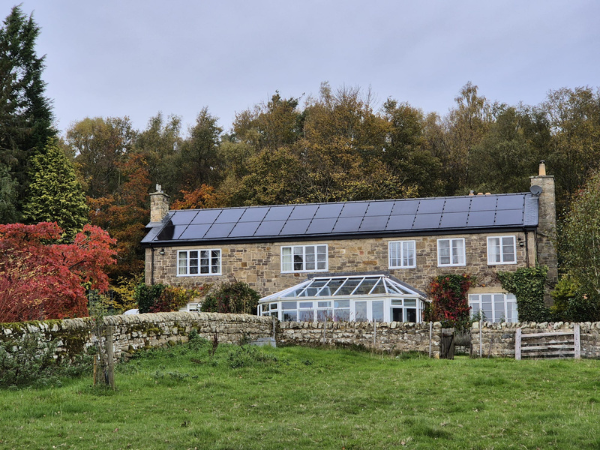
If a property needs reroofing within the next five years — aging slates, failing felt, leaking valleys — a solar reroof is worth assessing now. The alternative is spending on a conventional reroof and spending again on solar later. Combining them is almost always more cost-effective.
 02
02
Conservation areas and listed building settings
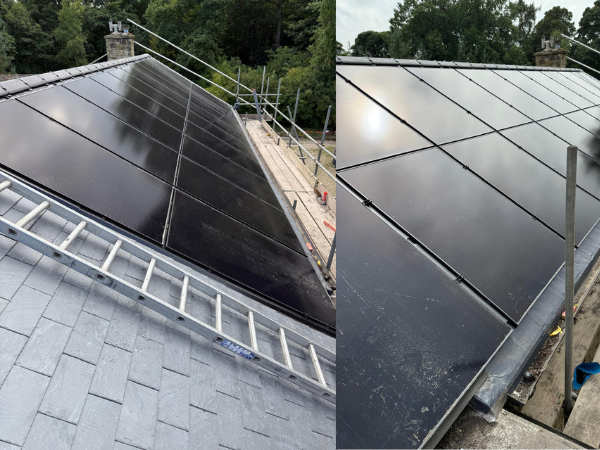
In-roof solar tiles sit flush with the roofline and are available in slate-effect and tile-effect finishes. They are widely accepted in conservation areas where conventional solar panels would not receive planning permission. We advise on planning requirements as part of the initial assessment.
 03
03
Appearance-priority projects
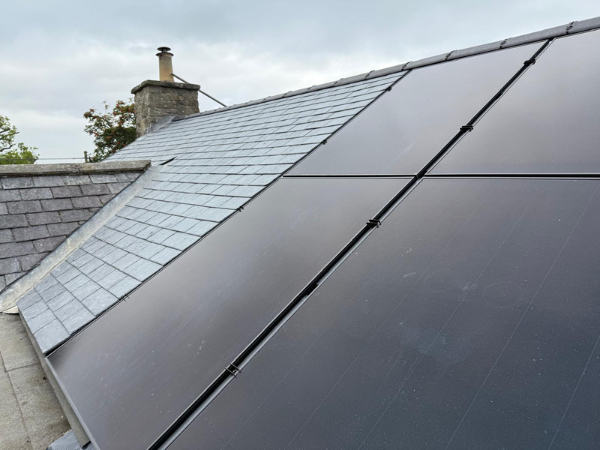
Properties where standard roof-mount solar is visually unacceptable — period properties, architect-designed homes, or owners who prefer a flush finish. In-roof solar achieves identical generation without visible mounting hardware or panel framing above the roofline.
 04
04
Properties with full roof area available
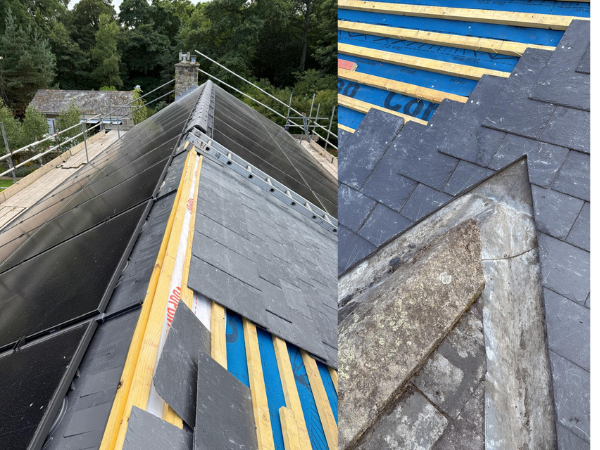
Detached and semi-detached properties with unobstructed roof area across multiple pitches achieve the highest system yields. A four-pitch Victorian property with 10–16 kWp across all elevations generates significantly more than a restricted south-facing roof-mount system.
4-bed property
typical configuration
Figures based on a four-bedroom detached property with good roof orientation across multiple pitches. System sized against 12 months of actual consumption data. Annual saving accounts for current export tariff, avoided import and battery optimisation. A roof assessment produces your property-specific numbers.
Everything decided
before you commit
Frequently asked
about solar reroofing
On properties that require reroofing, a combined solar reroof is typically more cost-effective than a conventional reroof followed by a solar installation later. The combined cost is lower than two separate projects, and the solar element delivers a long-term financial return that a conventional reroof does not provide.
Solar reroof costs depend on roof size, system specification and property type. For a typical 4-bedroom property, a combined solar reroof and battery storage system delivers annual savings of £1,800 to £3,500 with a payback period of 8 to 14 years. A free roof assessment gives you property-specific figures before you commit to anything.
In-roof solar tiles sit flush with the roofline and are available in slate-effect and tile-effect finishes. They are widely accepted in conservation areas where standard solar panels would not receive planning permission. Listed building consent requirements vary by property — we advise on planning requirements as part of the free roof assessment at no charge.
In-roof solar systems are designed to the same service life as a conventional roof — typically 25 to 40 years. Modules carry a 25-year performance warranty. The installation is weathertight to BS 5534 and MCS certified, with the same guarantee structure as a conventional roofing installation.
Book a free
roof assessment
The assessment covers roof condition, orientation and shading analysis, system specification and a detailed financial model — before you commit to anything. If a solar reroof makes sense for your property, you will know exactly what it returns.